
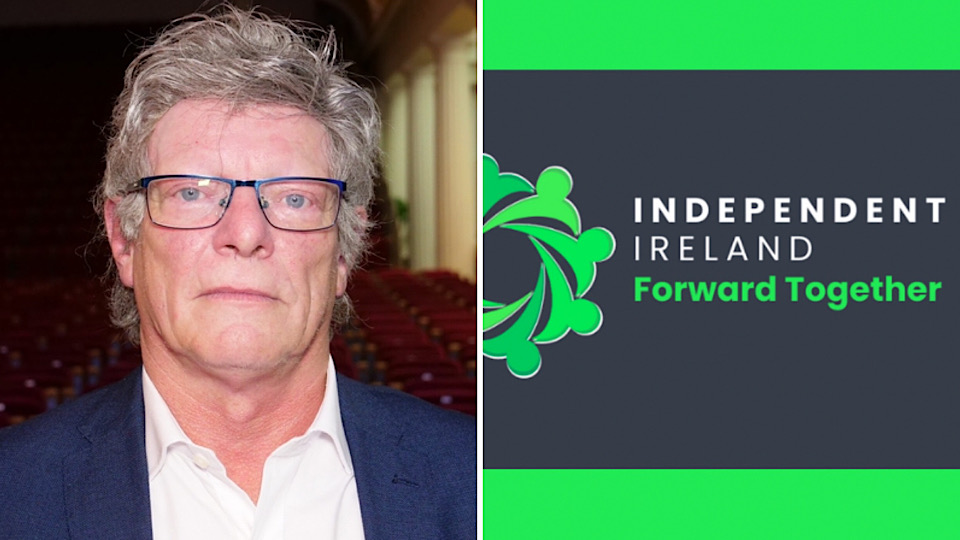
There comes a point where repeated questions stop being questions. They become a campaign. That is where Niall Boylan’s obsession now finds itself.
For years, Boylan has presented himself as someone merely asking difficult questions or encouraging debate. Yet anyone who looks honestly at his output can see a striking pattern. He even fancied himself as a politician, but time after time, programme after programme, social media post after social media post, the same target reappears. Not corruption. Not housing. Not healthcare. Not poverty. Not corporate greed. Transgender people.
In particular, transgender women. Boylan’s language strips away their humanity. They become, in his own words “blokes in dresses.” Their identities become “fantasy.” Their existence becomes something to ridicule rather than understand. Rather than treating one of Ireland’s smallest and most vulnerable minorities with dignity, he repeatedly reduces them to punchlines designed to provoke outrage and attract clicks.
Boylan’s editorial direction is reflected not only in the subjects he chooses, but in the voices he repeatedly amplifies. Over recent years, he has regularly provided a platform to prominent figures and organisations within Ireland’s and the UK’s gender-critical movement, including Niamh Uí Bhríain, Stella O’Malley, Helen Joyce, Linda de Courcy, representatives of The Countess and the Natural Women’s Council, alongside a succession of campaigners opposed to transgender rights and gender recognition reforms. While any broadcaster is entitled to choose their guests, the consistency of those choices is revealing. The same network of activists, campaigners and organisations returns again and again, reinforcing a single ideological narrative while portraying transgender people as a social, political or cultural threat. Taken together, these appearances are difficult to dismiss as isolated editorial decisions. They point instead to a sustained pattern of giving disproportionate visibility to one side of one of Ireland’s most divisive culture-war debates.
Boylan’s commentary has also revealed an apparent discomfort with women’s bodies that sits uneasily alongside his claims to be defending women. He has criticised women for breastfeeding in public, describing breasts as “secondary genitalia”- a characterisation that sexualises one of the most natural aspects of motherhood. While presenting himself as a champion of women’s rights in debates about transgender inclusion, his own remarks have at times reduced women’s bodies to something indecent that should be hidden from public view. It is a curious contradiction. A broadcaster who speaks so often about protecting women has, on occasion, seemed more offended by mothers feeding their babies than by the misogyny that women continue to face in everyday life. That tension raises legitimate questions about whether his concern is really for women themselves, or for a particular, highly restrictive vision of how women should behave and appear in public.
There are more striking contradictions in Boylan’s public persona, he has publicly recounted his wig incident on several occasions. He says that while attending the PPI Radio Awards, he overheard a group of broadcasters laughing behind him before one of them allegedly tugged at his non-surgical hair replacement. According to Boylan, the incident immediately brought back memories of the severe bullying he experienced as a child. He later described feeling like “a scared schoolboy” again and said the experience ruined the evening. Speaking afterwards, Boylan explained that his hair loss had affected him throughout his life, leaving him uncomfortable in photographs and deeply self-conscious about his appearance. He has also spoken about eventually undergoing non-surgical hair replacement as an adult after years of living with the psychological effects of alopecia, emphasising how profoundly the condition had affected his confidence and mental wellbeing.
His apparent willingness to ridicule transgender people over their appearance while becoming visibly upset when his own appearance became the subject of public mockery. Yet despite understanding the emotional harm caused by mocking someone’s appearance, he has repeatedly mocked transgender women through dismissive language and caricatures. Someone who rightly expected empathy when faced with accusations and jokes about wearing a wig has shown remarkably little empathy towards a community that faces relentless public scrutiny over how they look, dress and present themselves. It is a reminder that compassion loses much of its credibility when it is reserved only for ourselves.
He is not a journalist, he will certainly never be a politician. Every successful shock jock understands that outrage sells. Howard Stern built an empire on pushing boundaries. Boylan has openly expressed admiration for Stern, and much of his broadcasting persona appears built around the same formula: identify a controversial subject, inflame emotions, invite conflict, repeat. The problem is that the people paying his price are not celebrities with media teams. They are ordinary transgender people trying to go to school, go to work, visit hospitals and simply exist without becoming the latest topic for public ridicule.
What makes this particularly difficult to understand is Boylan’s own story. He has spoken publicly about childhood bullying, alopecia, depression, homelessness following the breakdown of his marriage and periods of suicidal despair. He knows what it feels like to be mocked. He knows what it feels like to be excluded. He knows what it feels like when people decide your suffering does not matter.
Yet instead of allowing those experiences to deepen his empathy, he repeatedly directs his platform towards another vulnerable minority. Someone who understands what cruelty feels like has chosen to amplify narratives that encourage more of it. His broadcasts often hide behind the language of the usual concern for children, for women, for fairness, for free speech.
The vocabulary sounds reasonable until you examine where the spotlight continually lands. If transgender people disappeared from public life tomorrow, one suspects Boylan would need to find another cultural enemy to sustain the same cycle of outrage. The target matters less than the conflict itself.
Gender recognition. Pronouns. Pride. School curricula. Hospitals. Sports. Libraries. Women’s spaces. Hardly a week passes without transgender people being pulled back into the conversation as though they represent one of Ireland’s defining national crises.
Ireland faces housing shortages, overcrowded hospitals, soaring living costs and widening inequality. Yet somehow, according to Boylan’s editorial priorities, a transgender teenager asking classmates to use the correct pronouns deserves endless airtime.
His social media reinforces the same pattern. Transgender people are routinely mocked through sarcasm, exaggerated analogies and dismissive language. Rather than engaging with individuals as human beings, they become symbols in a culture war that generates engagement, comments and shares. It is politics reduced to performance.
Boylan frequently portrays himself as a fearless defender of free speech. But free speech carries responsibilities alongside rights. A broadcaster with a substantial audience has the power to shape public attitudes. Repeating caricatures, encouraging suspicion and framing an already marginalised group as a social problem has consequences beyond his studio microphone.
For transgender people, those consequences are real. They mean increased hostility in workplaces, schools, healthcare settings and on the street. Every time influential voices portray them as deceptive, dangerous or absurd, another layer of public suspicion is added to lives that are already lived under disproportionate scrutiny.
Boylan also appears remarkably selective in deciding where his scepticism lies. He has publicly questioned accepted narratives surrounding figures such as Jimmy Savile and defended Michael Jackson’s legacy against widespread criticism. Yet when it comes to transgender people, uncertainty disappears. Nuance vanishes. Doubt is reserved for everyone except those already facing public hostility.
Niall frequently speaks about ordinary working-class people while simultaneously directing criticism towards communities that possess little political power. Transgender people are not billionaires. They are not multinational corporations. They are not government ministers. They are one of the smallest minorities in Irish society.
Throughout history societies have identified minorities as convenient explanations for broader anxieties. Yesterday it was different groups. Today it is transgender people. The script changes very little. Niall Boylan has every right to hold his opinions. When a broadcaster repeatedly returns to one vulnerable minority, repeatedly frames them as a problem, repeatedly questions their legitimacy and repeatedly invites audiences to debate their existence, It starts looking like obsession.
Perhaps the greatest irony of Niall Boylan’s public life is that it is built upon experiences that should have fostered extraordinary empathy. He has spoken about being born into a mother and baby home, growing up without knowing his birth mother, spending years searching for his origins, enduring childhood bullying, living with depression and suicidal thoughts, experiencing the breakdown of his marriage and periods of homelessness. Few public figures have spoken so openly about carrying so much personal pain. Ordinarily, such experiences deepen a person’s understanding of exclusion, rejection and vulnerability. In Boylan’s case, they appear to have had the opposite effect. Rather than standing alongside those who are marginalised, he has become one of the most recognisable voices in Ireland’s anti-trans movement, repeatedly directing his platform towards one of the country’s smallest and most vulnerable minorities.#
One possible explanation is that increasingly uncompromising rhetoric has become a route to acceptance within political circles that reward outrage and culture-war conflict. Whether that interpretation is correct or not, the contradiction remains impossible to ignore. A man who knows, perhaps better than most, what it feels like to be abandoned, ridiculed and rejected has chosen to dedicate a remarkable amount of his public life to ensuring that another marginalised group experiences exactly those same feelings.
Read More:
- Ken O’Flynn: Using the Memory of Murdered Gay Men to Attack Trans People
- Philip Dwyer: A Career Built on Hating Trans People.
- The Network Behind Women’s Space Ireland
- Niamh Uí Bhríain Repeal to Repression: How Niamh Uí Bhriain Recycled Ireland’s Defeated Anti-Abortion Machine into an Anti-Trans Campaign
- Helen Joyce From Trinity to Targeting Trans Lives: Helen Joyce and the Hypocrisy Ireland Keeps Importing
- Graham Linehan Why is Graham Linehan So Vehemently Anti-Trans?
- The Countess The Countess Exposed: Corporate Structure and Anti Trans Politics
- Natural Women’s Council The Natural Women’s Council and the politics of organised intimidation
- Wicklow Women4Women
- Sharon Keogan
- Peadar Tóibín The Danger Already Inside The Room
- Ken O’Flynn Using The Memory Of Murdered Gay Men To Attack Trans People
- Linda de Courcy
- Shaun Crowe
- Derek Blighe
- Paddy O’Gorman From Tights To Fragile Masculinity