
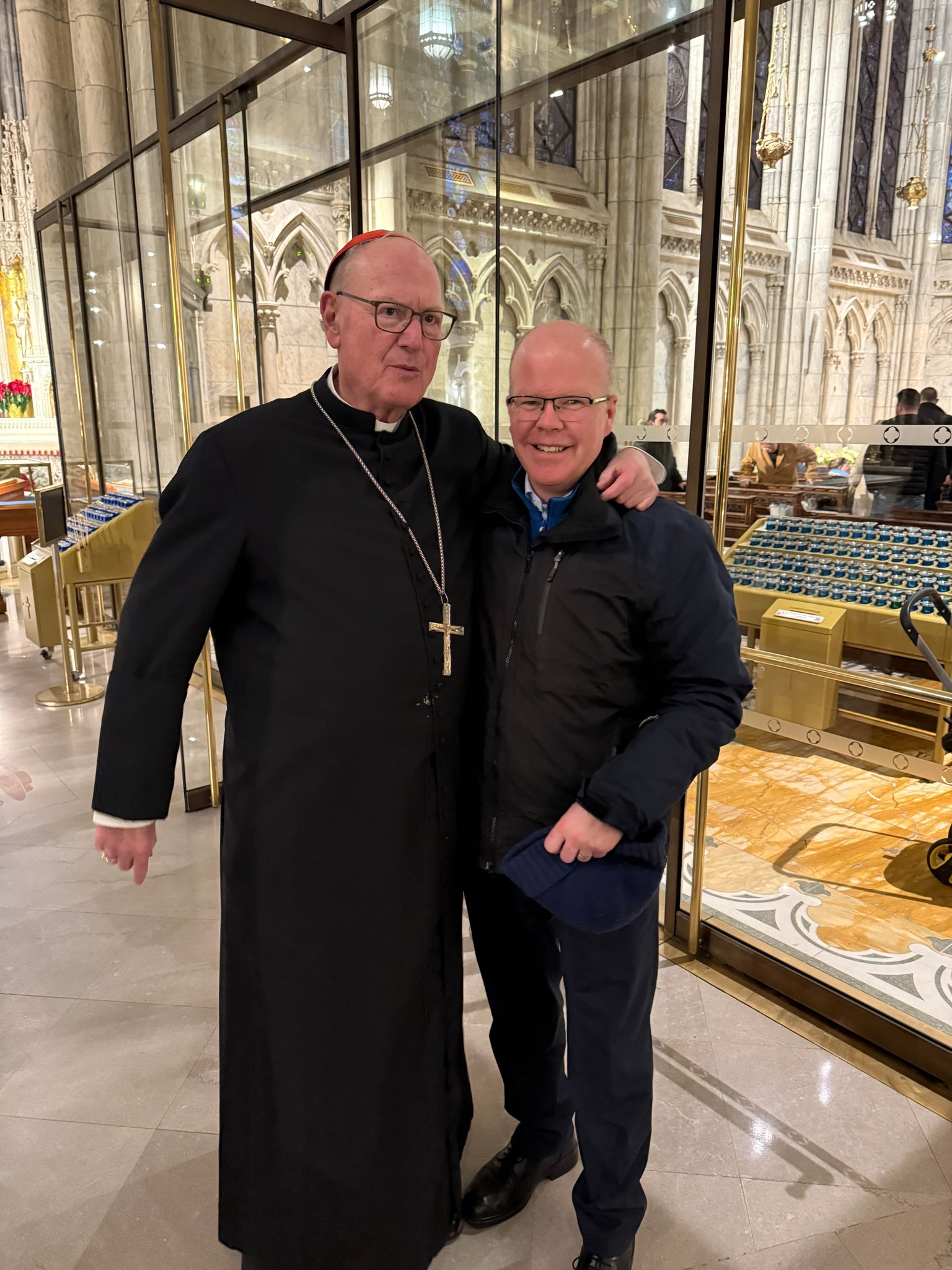
The greatest threat to equality rarely arrives screaming. Sometimes it arrives smiling, suited and ready for his television interview.
If Peadar Tóibín knocked on your door tomorrow, many people would struggle to understand why anyone might fear his politics. He is polite, articulate and presents himself as the voice of common sense. He does not look like the caricature of a reactionary politician. That is what makes him effective. Because while Ireland congratulates itself on rejecting extremism, Tóibín has spent years advancing a worldview that opposes abortion rights, attacks transgender inclusion, and elevates traditional religious morality above bodily autonomy. He is not the angry man shouting at the gates. He is the danger already inside the room, he is on our TV, constantly smiling reassuringly, while arguing that some people deserve fewer rights than others.
I am not neutral, I am an intersex woman. I am transgender. I am a feminist. I believe in bodily autonomy, reproductive freedom and LGBTQ+ equality. Peadar Tóibín opposes much of what I have spent my life fighting for.
Politics is full of disagreement. What concerns me is not simply that he disagrees with people like me. It is the consistency with which transgender people, queer people and those seeking bodily autonomy become the targets of his political interventions.
Peadar Tóibín did not leave Sinn Féin because the party became radical. He left because, on one of the defining human rights questions of modern Ireland, it was moving with society rather than against it. His departure over abortion exposed a fundamental divide. Sinn Féin is often too cautious, inconsistent and at times frustratingly reluctant when it comes to both abortion rights and transgender equality, particularly given its need to navigate very different political realities north and south of the border. I am a former SF member and Cumann secretary for one of its most successful electoral divisions . It has frequently attempted to hold together socially conservative and socially progressive constituencies under the same banner. Tóibín, however, could not accept even that compromise. When faced with a choice between expanding bodily autonomy and defending a Catholic understanding of reproduction, he chose the latter. The creation of Aontú was not simply a disagreement over one referendum. It was the construction of a political home for a broader socially conservative project, one that continues to shape the party’s positions on abortion, transgender rights, family life and social change today.
The image projected by Tóibín is one of moderation. He is calm, articulate and measured. He speaks about common sense, science and protecting children. But when transgender people appear in his speeches, Dáil questions and media appearances, they rarely appear as citizens whose lives deserve dignity and protection. They appear as a problem.
The controversy surrounding Ógra Aontú in 2025 should have prompted a deeper reckoning than it did. It would for any other party. When racist and antisemitic messages from senior members of the youth wing became public, the party responded by expelling those involved and condemning the comments. That was necessary. What never seemed to happen, however, was a public conversation about the culture that allowed such attitudes to flourish in the first place. The problem was presented as a handful of bad individuals rather than an opportunity to examine the broader political environment in which they emerged. There was little reflection on the hyper-masculine culture, grievance politics, hostility to social justice movements, and obsession with perceived threats to traditional identities that increasingly characterise parts of the conservative right. Removing a youth leader may deal with a symptom. It does not necessarily address the conditions that produced the problem. For feminists and queer people, the uncomfortable question remains: what kind of political culture attracts young men who feel comfortable expressing racism, antisemitism and contempt for others in the first place, and why was that conversation allowed to end so quickly?
In December 2025, during a Dáil debate on transgender healthcare, Tóibín told the chamber that transgender healthcare was being driven by ideology rather than evidence. He argued that “science and evidence” had been replaced by ideology and warned that politicians were ignoring medical concerns in favour of what he described as an intellectual fashion.
During the same period he publicly claimed that transgender ideology has trumped biological science to the detriment of children” and argued that medical professionals faced risks for speaking critically about gender-affirming healthcare.
Again and again, Trans people are framed as evidence of ideological excess, Trans healthcare is framed as dangerous. Recognition and inclusion are framed as threats.
In the Dáil, Tóibín cited claims that activists were brainwashing politicians and argued that debate on transgender issues had been driven by ideology rather than evidence. He stated that a woman is a female adult (Adult Human Female) and accused government institutions of attempting to erase the category of women through inclusive language.
Schools have become a particular focus. Tóibín has repeatedly questioned transgender inclusion within education. In parliamentary questions he sought information on the provision of gender-neutral toilets in schools. In May 2026 he described gender-neutral school toilets as crackpot ideology, claiming that girls were being denied privacy and that government decision-making had become captured by gender ideology. He argued that gender-neutral facilities were being imposed in the name of inclusion while actually creating exclusion.
As an intersex woman, I find the constant invocation of biology particularly revealing. Politicians like Tóibín speak about biology as though it were simple, obvious and beyond dispute. Yet people like me rarely appear in their speeches. Intersex bodies expose the limitations of culture-war slogans. We exist. We always have. Human sex development is more complex than the tidy binaries presented in Dáil speeches and newspaper columns. The fact that intersex people disappear almost entirely from these debates tells us that it is inconvenient when certainty is politically useful.
Bodies do not always fit neatly into categories. Sex characteristics vary. Development varies. Human beings vary. Yet politicians who speak constantly about biological certainty seldom engage with those realities.
Tóibín’s interventions on transgender people be viewed in isolation. His political career has been defined by opposition to abortion rights. He left Sinn Féin over abortion and founded Aontú around a socially conservative political vision. His party is routinely described as socially conservative. Aontú has promoted audits of diversity, equity and inclusion initiatives, criticised unconscious bias training and positioned itself against what it characterises as woke politics.
Tóibín has also advocated a stricter immigration system and increasingly frames migration through the language of control, capacity and national interest. Seen individually, each of these positions can be defended by supporters as legitimate policy choices. Taken together, however, they reveal something larger. A worldview in which social change is approached with suspicion, in which traditional family structures are privileged, in which reproductive autonomy is constrained, and in which transgender inclusion is treated as a threat rather than a matter of equality.
I do not find comfort in claims that Peadar Tóibín is merely asking questions. Questions have consequences. When a national political leader repeatedly frames transgender people as ideological, dangerous, confusing, harmful or evidence of social decline, those messages do not remain confined to the Dáil. They shape public attitudes, influence policy and legitimise attacks on the Trans community.
Underpinning much of Peadar Tóibín’s politics is a deeply traditional Christian worldview. There is nothing wrong with religious belief, and people of all faiths have every right to participate in public life. The question is what happens when those beliefs become the foundation for public policy in a diverse, secular democracy. Tóibín’s positions on abortion, family life, sexuality and gender point towards a vision of society rooted in traditional roles and moral authority rather than personal autonomy. Women are encouraged towards motherhood, the traditional family is elevated as the preferred social model, and challenges to established ideas about sex and gender are treated with suspicion. Presented as common sense or timeless values, these ideas often amount to a political project that seeks to restore older power structures and social hierarchies. For feminists, the concern is not that Tóibín is religious. It is that his politics repeatedly place religiously informed ideas about how people should live above the right of women, queer people and transgender people to decide those questions for themselves.
The danger is not that Peadar Tóibín shouts, the danger is that he does not have to. He packages his exclusion as common sense, as moderation – And because he does so politely, much of Ireland still struggles to recognise it for what it is.
Trans Healthcare Debate – 3 December 2025
- Dáil debate where Tóibín argued that trans healthcare was being driven by ideology rather than evidence:
Dáil Debate – Motion on Trans Healthcare (3 Dec 2025)
Follow-up Dáil Debate – 4 December 2025
- Tóibín references the Labour trans healthcare motion and expands on his objections:
Dáil Debate – 4 Dec 2025
Parliamentary Question on Gender-Neutral Toilets
- Question submitted by Tóibín to the Minister for Education:
School Facilities Parliamentary Question (12 Feb 2026)
Parliamentary Question on Gender Protection
- Equality legislation question relating to gender protections:
Equality Issues Parliamentary Question (9 Apr 2024)
Media Statements on Trans Issues
“Gender Neutral Toilets” / “Crackpot Ideology”
- Aontú press release quoting Tóibín:
Peadar Tóibín on Gender-Neutral Toilets Controversy
Bí Cineálta / Gender Identity in Schools
- Tóibín questioning “harmful or confusing concepts about gender identity”:
‘No Answer’ from McEntee on ‘Harmful’ Gender Concept
Pronouns in Schools
- Aontú statement calling for guidance on pronoun use:
Department of Education Has a Duty to Issue Clear Guidelines Around Pronouns
Parents Being Forced into “Trans Classes”
- Article reporting Tóibín’s objections to curriculum content:
Fears Children Could Be Forced Into Trans Classes
Interviews / Broadcasts
Niall Boylan Interview
- Following the December 2025 Dáil debate:
Government Are Brainwashed By Trans Activists – Niall Boylan Interview
Video of Tóibín’s Dáil Speech
- Recording of his contribution on trans healthcare:
Deputy Peadar Tóibín Speech – 3 Dec 2025
About Sorcha:
Sorcha Rosa is a writer, cyclist, speaker, and public voice exploring politics, identity, feminism, intimacy, and modern Irish life through personal writing, activism, conversation, and lived experience. Discover more writing, reflections, and experiences at Simply-Sorcha.com.
Comments
One response
Thank you so much for this! I’m a straight male, now 72, married to a strong feminist (well, we lived together for over 30 years before covid and diasporic children prompted thoughts of inheritance and much else).
I think your analysis is simply brilliant – incisive, thoughtful, sensitive. I think that the insertion of Aontú’s disingenuous propaganda into the political discourse is as dangerous in its way as Opus Dei’s vicious message was in its time.
Very best wishes
Piaras
Cork