
Healthcare for All, on Our Terms, in Our Communities
Ireland likes to tell itself a story. A country that voted for marriage equality. A country that repealed the Eighth Amendment. A country that presents itself internationally as progressive, compassionate and inclusive.
For transgender people, that story bears little resemblance to reality. Behind the rainbow branding and carefully crafted political speeches lies a healthcare system that has fundamentally failed an entire community. While politicians congratulate themselves on symbolic progress, transgender people are waiting not months, but years – often more than a decade, for healthcare that should be available as a matter of routine.
Ireland’s transgender healthcare system has become an exercise in endurance. People are expected to place their lives on hold while navigating psychiatric assessments, endless referrals and opaque bureaucratic processes that seem designed less to provide healthcare than to ration it. The National Gender Service has become the embodiment of a model that places institutions above patients and gatekeepers above autonomy.
Imagine telling someone with diabetes they must wait ten years before accessing insulin, or forcing a cancer patient to convince multiple professionals that they are genuinely ill before treatment could begin. Such a system would rightly be recognised as cruel, negligent and politically indefensible.
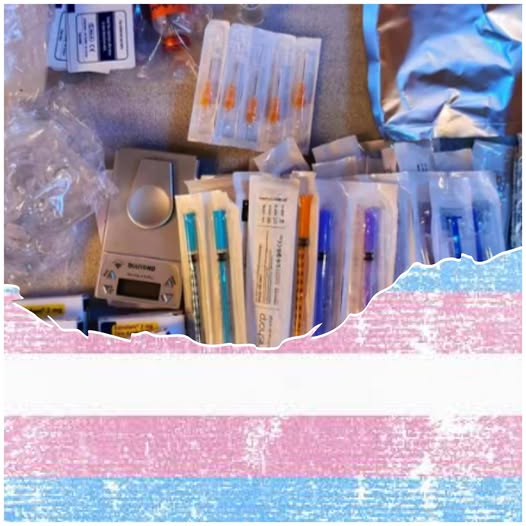
When the patients are transgender, however, the same political establishment suddenly discovers infinite patience for delay. The inevitable consequence has been entirely predictable. Across Ireland, increasing numbers of transgender people have turned to self-managed healthcare. They source hormone replacement therapy themselves. They educate one another through community networks. They share medical knowledge because the State has chosen not to provide it.
The Lena method emerged within DIY transgender healthcare communities as an alternative approach for people unable to access formal medical services. Associated with a community supplier, it centres on estradiol monotherapy – typically using injectable oestradiol without routine testosterone blockers for many transfeminine people, based on the principle that sufficiently maintained oestradiol levels can suppress testosterone production. While widely discussed in peer-support networks, particularly among people excluded from healthcare systems with long waiting lists, it developed as a response to systemic barriers rather than as a substitute for accessible public healthcare. Its existence highlights a stark reality: when healthcare systems fail to provide timely, evidence-based care, patients often create their own pathways out of necessity rather than choice. And still GPs will deny these people the relevant Blood Tests.
For many trans men and transmasculine people, the situation is even more restrictive. Unlike oestrogen, testosterone is a controlled medicine, making it significantly more difficult to obtain legally outside formal healthcare pathways. Import restrictions, prescription requirements and tighter regulation mean that people facing years-long waiting lists often have far fewer options than transfeminine people. Some become trapped in a system that offers no realistic timeframe for treatment, while others feel pushed towards the unregulated market for anabolic steroids, where products may be of uncertain quality, incorrectly dosed or counterfeit. No one should have to choose between waiting indefinitely for medically necessary healthcare and relying on an underground market. That people are placed in this position is a profound indictment of Ireland’s current approach to transgender healthcare.
People do not assume responsibility for their own medical care because it is fashionable. They do it because every official door has been closed. DIY healthcare is not the cause of Ireland’s crisis. It is the symptom of a healthcare service that has abdicated its responsibilities.
Throughout my own advocacy, whether speaking on transgender healthcare, intersex rights or legal recognition, the same pattern emerges repeatedly. The Irish State creates barriers, communities build solutions, and politicians later congratulate themselves for the resilience of those they abandoned. The burden of survival is transferred onto the very people being failed.
The same philosophy extends beyond transgender healthcare. As Secretary of Intersex Ireland, I have repeatedly highlighted how medical systems continue to prioritise institutional authority over bodily autonomy. Intersex infants continue to face medically unnecessary interventions performed without their consent. Different communities. Different manifestations. The same underlying belief that medical institutions, rather than individuals, should control our bodies.
This is why the struggle for transgender healthcare cannot be separated from broader struggles for bodily autonomy. The same political logic that once denied abortion rights now denies timely gender-affirming healthcare. The same paternalism that insists politicians and clinicians know best continues to shape healthcare policy today.
As a member of ROSA Socialist Feminist Movement, I reject the idea that transgender healthcare exists outside wider questions of class, equality and public services. Working-class transgender people suffer first and suffer longest. Those with financial resources increasingly travel abroad or access private providers. Those without money wait. They deteriorate. They suffer poorer mental and physical health while bureaucracies debate pathways and pilot programmes.
Waiting lists disproportionately punish those least able to escape them. This is also why corporate celebrations of diversity ring increasingly hollow. Rainbow logos each June do not prescribe hormones. Public relations campaigns do not shorten waiting lists. Inclusion strategies cannot substitute for functioning healthcare services.
The energy for genuine change has come instead from grassroots organising. Trans and Intersex Pride Dublin has consistently rejected sanitised, corporate narratives in favour of demands rooted in material reality. The call has remained remarkably consistent: informed consent, public healthcare, bodily autonomy and community power.
There is nothing moderate about forcing people to wait years for medically necessary treatment. There is nothing balanced about requiring psychiatric approval before adults can make decisions about their own bodies. There is nothing reasonable about a healthcare service that pushes patients into self-medication while simultaneously condemning them for doing so.
Ireland does not have a shortage of evidence, We have a shortage of political courage. The solutions are already well understood. End psychiatric gatekeeping. Replace it with a GP-led informed consent model. Fund gender-affirming healthcare fully within the public health service.
None of this requires another decade of consultation. It requires political will. Healthcare delayed is healthcare denied. Every additional year spent preserving obsolete gatekeeping models represents a conscious political choice to prolong suffering that is entirely preventable.
History has repeatedly shown that rights are rarely handed down from above. They are won through organised communities refusing to accept injustice as inevitable. Marriage equality was not gifted by politicians. Reproductive rights were not bestowed by generous governments. Every meaningful advance in bodily autonomy has been fought for by ordinary people refusing to accept extraordinary cruelty.
Transgender healthcare will be no different. We should reject the politics of gratitude. We owe no thanks for being placed on waiting lists. We owe no appreciation for systems that force communities to become their own healthcare providers. We owe no patience to institutions that have had decades to act.
Healthcare is not a privilege. It is not something to be negotiated through psychiatric approval or bureaucratic endurance. It is our right. And until Ireland finally recognises that simple truth, the struggle continues.
Trans people are not a problem to be managed. We are not diagnoses to be assessed or debates to be moderated. We are people demanding what should never have been denied in the first place: the right to control our own bodies, determine our own futures and access healthcare with dignity. Anything less is unacceptable.
Sorcha Rosa
ROSA Socialist Feminist Movement
Further Reading:
- Ireland May Finally Recognise Non-Binary and Intersex People
- Ten Years On – Ireland’s Gender Recognition Act Still Leaves Us Behind
- We Have Never Been Silent: Speaking on Intersex Healthcare and Human Rights at RCSI
- When Ireland Spoke to the World: Meeting U.S. LGBTQI+ Envoy Jessica Stern
- We Were Never Meant to Be Invisible: Reflections from Bread and Roses 2026
- Why Should Non-Binary Cyclists Have to Lie to Participate?
- Anti-Fascism Must Include Bodily Autonomy
- Open letter from Arcane Cycling Team regarding gender options on the Cycling Ireland membership portal
- Rights Without Routes
- Athens, Boobs, and the Future of Intersex Rights
- Ireland Under Scrutiny: ECRI and the Fight for Trans & Intersex Rights
- Ireland’s First Intersex Cycling Champion