
Over the past several years, Ireland has seen the growth of a far-right movement built on fear, scapegoating, and manufactured outrage. Migrants, refugees, trans people, intersex people, queer communities, anti-racist activists, and anyone seen as outside a narrow vision of a real Ireland, have been turned into targets in an endless cycle of online harassment and political agitation.
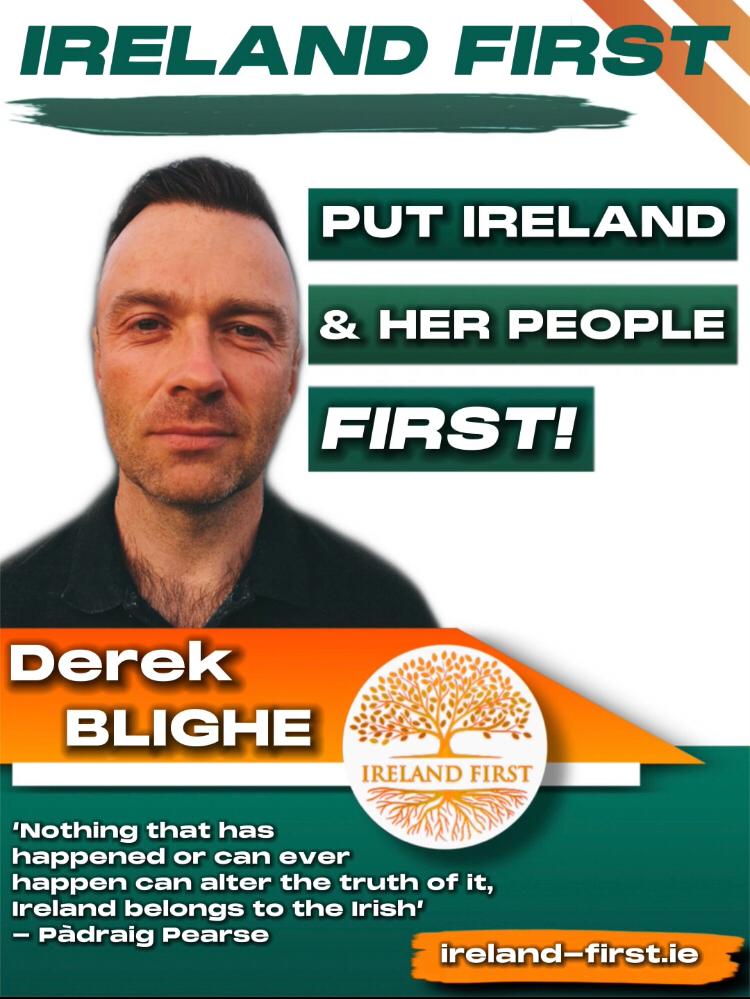
One of the most recognisable figures within this movement is Derek Blighe. Blighe built his platform through anti-immigrant protests, livestreams, conspiracy theories, lies and social media outrage designed to provoke anger and fear. His politics depend on convincing ordinary people that vulnerable communities are responsible for social decline while those with real power escape scrutiny entirely.
Migrants become scapegoats for housing failures caused by decades of government policy. Refugees become symbols of national collapse. Queer people become threats to children. Trans people become targets for public obsession. Intersex people become erased entirely or treated as medical abnormalities to justify reactionary narratives about sex and gender.
Blighe has repeatedly spread inflammatory and false claims online. In one case, he falsely implied that several Black men in Cork had been planted by the government when in reality they were members of a religious order attending a conference. Gardaí publicly contradicted claims amplified online about an alleged attempted child abduction in Kenmare. During the Dublin riots, false rumours circulated online claiming that one of the injured children had died. The atmosphere created by this misinformation helped fuel racist unrest in the streets.
The far right relies on turning human beings into symbols rather than people. Migrants are treated as invaders. Trans people are treated as threats. Intersex people are erased unless our bodies can be weaponised in culture war arguments about biology and sport.
More recently, Blighe targeted me directly in a social media post asking, “Can someone explain what this is, and how did it get kids?” alongside photographs of me and references to my children. The willingness of Blighe to download, repost, and circulate photographs of children in order to target their families for political harassment. That is the behaviour that should be considered unacceptable. The decision to weaponise images of children in attacks against marginalised people says far more about the politics of those involved than it does about the families being targeted.
Referring to a trans or intersex person as ‘this’ instead of as a human being is intended to humiliate and degrade. Bringing children into it makes it even more disturbing and perverse. The goal is public ridicule, intimidation, and the encouragement of hostility from followers.
This is now a central feature of far-right politics internationally. At the same time, figures like Blighe constantly portray themselves as victims. Criminal proceedings, public criticism, or legal accountability are reframed as persecution. This martyr complex is now standard within far-right politics across Europe and the United States.
Investigations into private spaces linked to Ireland First exposed racist abuse, anti-Semitism, violent rhetoric, and discussions involving fantasies of political violence. Yet publicly these movements attempt to present themselves as concerned citizens.
Anti-trans rhetoric has also become increasingly central to Ireland’s far right because trans people are useful culture war targets. The goal is to create moral panic and division while presenting reactionary politics as common sense. The obsession with biology, drag events, schools, and queer visibility mirrors strategies already used internationally by far-right movements aligned with figures like Tommy Robinson and others across Europe and the United States.
Intersex people are increasingly caught within this politics too. Our existence disrupts the simplistic biological narratives the far right depends on. That is why intersex bodies are either ignored completely or reduced to talking points in attacks on trans people.
The reality is that fascist and reactionary politics always require enemies. They need groups to blame. They need fear to survive. Today the targets are migrants, trans people, intersex people, refugees, anti-racist activists, and journalists. Tomorrow it expands further.
Blighe’s public image as a defender of ordinary Irish people also sits alongside a growing record of criminal convictions and legal controversies. He has been convicted of theft relating to a Ukrainian support charity shop, as well as threatening and abusive behaviour toward a hotel manager during anti-refugee agitation. He is also currently facing ongoing criminal proceedings relating to the harassment of a member of An Garda Síochána. These incidents expose the contradiction at the centre of far-right politics. Figures who constantly present themselves as defenders of law, order, and public morality repeatedly become associated with intimidation, harassment, aggression, and hostility toward the very communities they claim to protect.
None of this makes ordinary people safer. None of it solves the housing crisis. None of it improves healthcare or wages or public services. It simply redirects anger downward toward vulnerable communities while those in power remain untouched.
Ireland cannot afford to normalise this politics. Hatred does not become legitimate because it wraps itself in a tricolour. Another recent example of how this movement operates can be seen in the targeting of Senator Eileen Flynn after she spoke honestly about her experiences as a Traveller woman. Flynn said publicly that the tricolour can frighten her because of the hatred and intimidation she has experienced from people wrapping themselves in nationalism while attacking minorities. Rather than reflecting on why a member of the Traveller community might feel that way, far-right figures responded with outrage and hostility. Her comments were deliberately distorted in order to provoke anger online and present her as somehow anti-Irish. What Flynn highlighted was something deeply important – symbols are shaped by how they are used. When nationalism becomes associated with racism, intimidation, and exclusion, people who are targeted by those politics can understandably feel fear rather than belonging. I do. The far right moves to attack marginalised people who speak openly about their experiences of hostility in Ireland today.
The far right is not offering a future. It is offering a politics built on resentment, fear, and cruelty. And history has already shown us where that road leads.