
Intersex liberation, bodily autonomy, and why refusing silence remains a radical act.
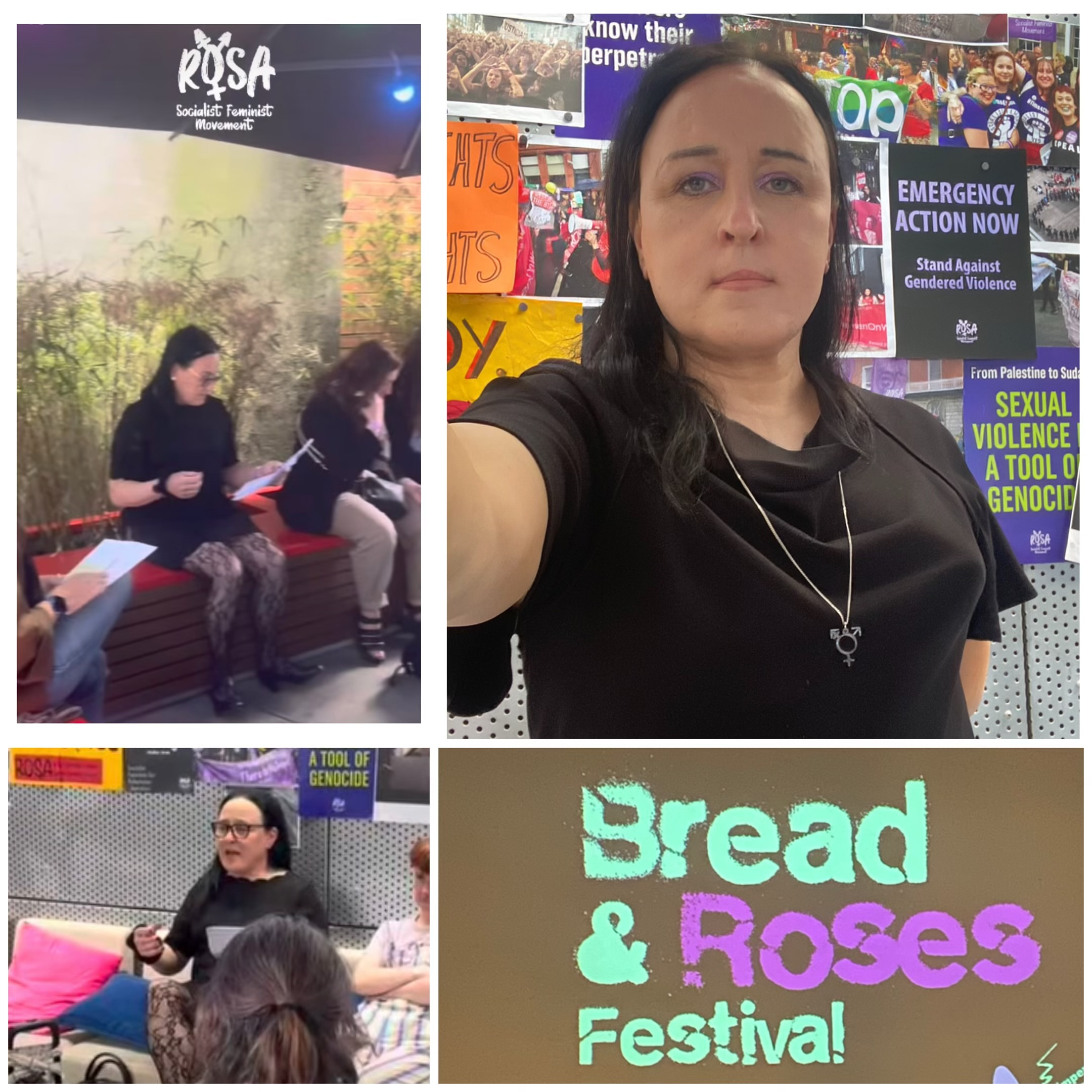
This weekend I had the privilege of speaking at the Bread and Roses Festival alongside an extraordinary group of writers, artists, activists and organisers. The programme included voices such as Meena Kandasamy, Aoife Moore, Ailbhe Smyth, Ruth Coppinger and Red Umbrella, and I was delighted to join them for a conversation about intersex liberation, bodily autonomy and the politics of our bodies.
My session, hosted by Ollie Bell, was built around a talk titled Beyond the Binary: Intersex Liberation and the Fight for Bodily Autonomy.
The session was well attended, the discussion was thoughtful, and what struck me most was how eager people were to engage. Attendees brought their own experiences, questions and reflections. As always happens when I speak publicly, I drifted away from my prepared text. I talked about my own life. I talked about growing up intersex in Ireland. I talked about medicine, secrecy, survival and the strange experience of discovering that decisions about your body were made long before you were ever given a voice in them.
Intersex people remain remarkably invisible in public life. Most people can spend decades without hearing the word. Not because we do not exist. Not because we are rare. But because invisibility has been useful. Useful to institutions. Useful to systems that depend on the fiction that every body fits neatly into one of two categories.
Ireland has a long history of institutional control over bodies. We know the stories of the Magdalene Laundries, Mother and Baby Homes, forced adoptions and the policing of sexuality. Intersex people grew up inside that same culture. We were taught that difference was something to be hidden. Families were encouraged towards silence. Medical authority was treated as unquestionable. Many intersex people still discover the truth about their own bodies only later in life, often through accident, illness, fertility investigations or old medical records.
One of the themes that resonated strongly during the discussion was the difference between care and control. For decades, intersex children across Europe have been subjected to surgeries and interventions that were not medically necessary but were designed to make bodies appear more acceptably male or female. Healthy tissue removed. Fertility lost. Decisions imposed before a child was old enough to understand what was happening. These are not historical stories from some distant past. Many intersex adults in Ireland live with those consequences today.
I also spoke about healthcare. Through my work in LGBTQIA+ advocacy and European policy, I have become increasingly aware of how healthcare systems are designed around assumptions about what bodies are supposed to look like. Women are often overlooked. Trans people encounter barriers at every stage. Intersex people frequently disappear altogether. If you are not counted, you are not considered. If you are invisible in research, you become invisible in care.
The conversation inevitably turned towards the current political climate. Across Ireland, Britain, Europe and beyond, reactionary movements have become obsessed with defining who counts as a woman, who belongs and whose body is legitimate. Intersex people create problems for those simplistic narratives simply by existing. Human biology has never been as tidy as culture warriors would like to pretend. Once you acknowledge intersex people honestly, many of the arguments built on rigid binaries begin to fall apart.
What concerns me most is how often intersex people are invoked without being listened to. We are cited in debates but excluded from decision making. We are referenced as evidence while our own experiences are ignored. Meanwhile the same medical systems that harmed generations of intersex people continue largely unchallenged.
Yet despite everything, I left Bread and Roses feeling hopeful. I met young activists discovering intersex issues for the first time. I spoke with feminists eager to understand the connections between bodily autonomy and intersex rights. I heard from people who recognised pieces of their own experiences in stories that had previously seemed unfamiliar. Those conversations matter. Change rarely begins with legislation. It begins when people see each other differently.
Intersex liberation is not a niche issue. It is not a special interest concern. It is a feminist issue. A healthcare issue. A socialist issue. An anti-fascist issue. At its heart is a simple principle: every person deserves the right to exist in their own body without coercion, shame or forced intervention.
The far right depends on rigid categories and strict definitions of who belongs. Intersex people expose how fragile those categories really are. We have always existed. We always will. The only thing changing is that more of us are refusing silence.
And after the conversations I had this weekend, I suspect many more people are ready to listen.
Click Below for Presentation: