
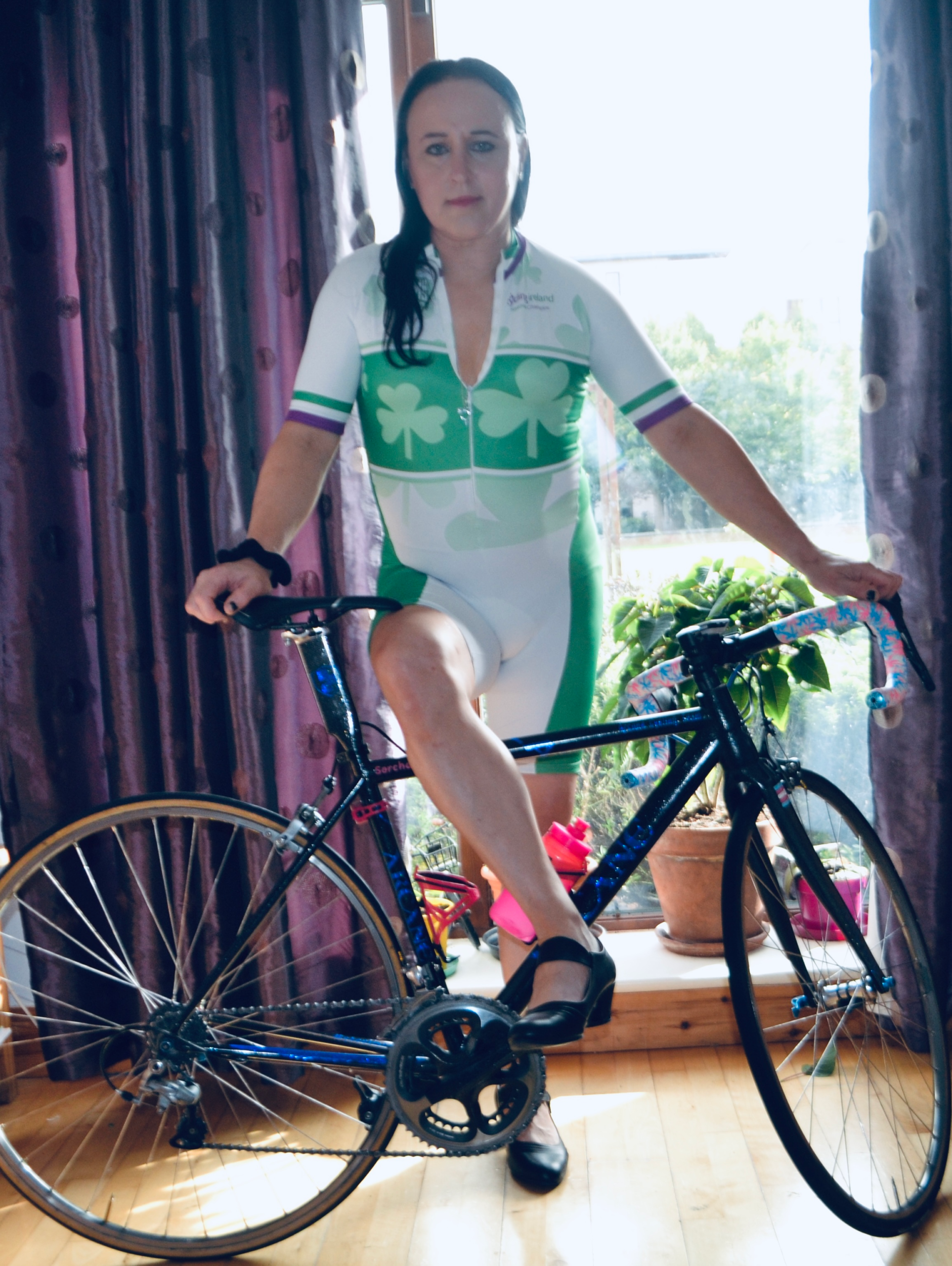
I am most likely not the first intersex elite athlete in Ireland and I will not be the last. But for too long, we have lived in the shadows of sport – invisible, unacknowledged, and often unaware of who we are until the system forces its categories and humiliating tests onto us.
For me, cycling was both the reason I survived – and the reason I discovered I was intersex.
Growing Up in 1970s Ireland, I could never really fit in. In school I was the small, sallow-skinned child who didn’t belong with the boys. That alone made me a target for violence from classmates, male teachers, and abuse from Christian Brothers. They saw me as weak, different and a target.
By secondary school, I had found refuge in the gothic subculture and, more importantly, the bike. Hours spent alone on the road gave me freedom, and I was racing – not just keeping up with the boys but beating them. Not once, not occasionally, but over and over again.
And yet, every victory was followed by ridicule. My inconsistency – one week unstoppable, the next barely able to finish, was treated as laziness. “Too soft. Doesn’t like to hurt themselves. Useless, except for that freakishly fast sprint.” That’s what the men in charge of Irish cycling said about me.
When I reached the senior ranks, the scrutiny deepened. My body collapsed under the workload. My testosterone levels were already below that of a cis woman, and I began to faint, to crash, to catch every infection going. I had severe glandular fever, tonsils removed. I was tested for lymphoma. I failed a sports science test where I was told I would never ever win a race…
But I was winning races.

Doctors wanted to fix me. Mná feasa wanted to heal me. I was even told to drink a mixture of pond water & leaves for some Irish cure. Nobody asked if I wanted fixing. I was happy enough being me. Until one consultant shattered my world: I was not normal. I was intersex.
I walked out of his office and swore never again to see a doctor unless I was injured. Suddenly every taunt, every jeer of not being normal rang true. I drank. I lived recklessly. I buried myself in makeup, parties, and bikes.
Thrown out of home at 19, I had moved to Dublin. Less Catholic control. More freedom. Still racing. Still winning occasionally. I adapted. I changed my approach. I coasted through races until the moment for a sprint, then I’d take it. If I couldn’t win, I was last. That was my survival.
I was winning Elite National Medals. I wore green jerseys, yellow jerseys. I was the cycling champion of Ireland. Outwardly, a success. Inwardly, a fraud.
Because the truth was hidden, I was intersex, I was Trans.
Where I truly belonged was in women’s cycling. I sat on commissions. I organised events. I coached women. I managed national and regional women’s teams. That’s where I found joy and solidarity, far from the suffocating conservatism of men’s cycling.
But even there, I remained guarded, carrying a secret. Sport kept me alive, but it also forced me to live a lie.
I am an intersex trans woman. I was Ireland’s intersex cycling champion.
The failed man in sport narrative doesn’t fit. I was not a failure, I was the best. But inside I was always intersex. Always trans. Always different.
Sport is trying to erase people like me. Athletics is reintroducing sex testing for women. Governing bodies posture about “protecting women’s categories” while underfunding women’s sport, excluding trans women, and ignoring intersex realities. It is prejudice dressed up as fairness.
Sport must stop policing bodies and identities. Stop pretending cis women need protection from us. We were here all along – racing, winning, surviving.
They may not like it – colleagues, former friends, family, the Irish cycling establishment – but for the first time I am myself. The world must change for people like us, because we are finished hiding.
My name is Sorcha. I was Ireland’s intersex cycling champion. And I will not be the last.