
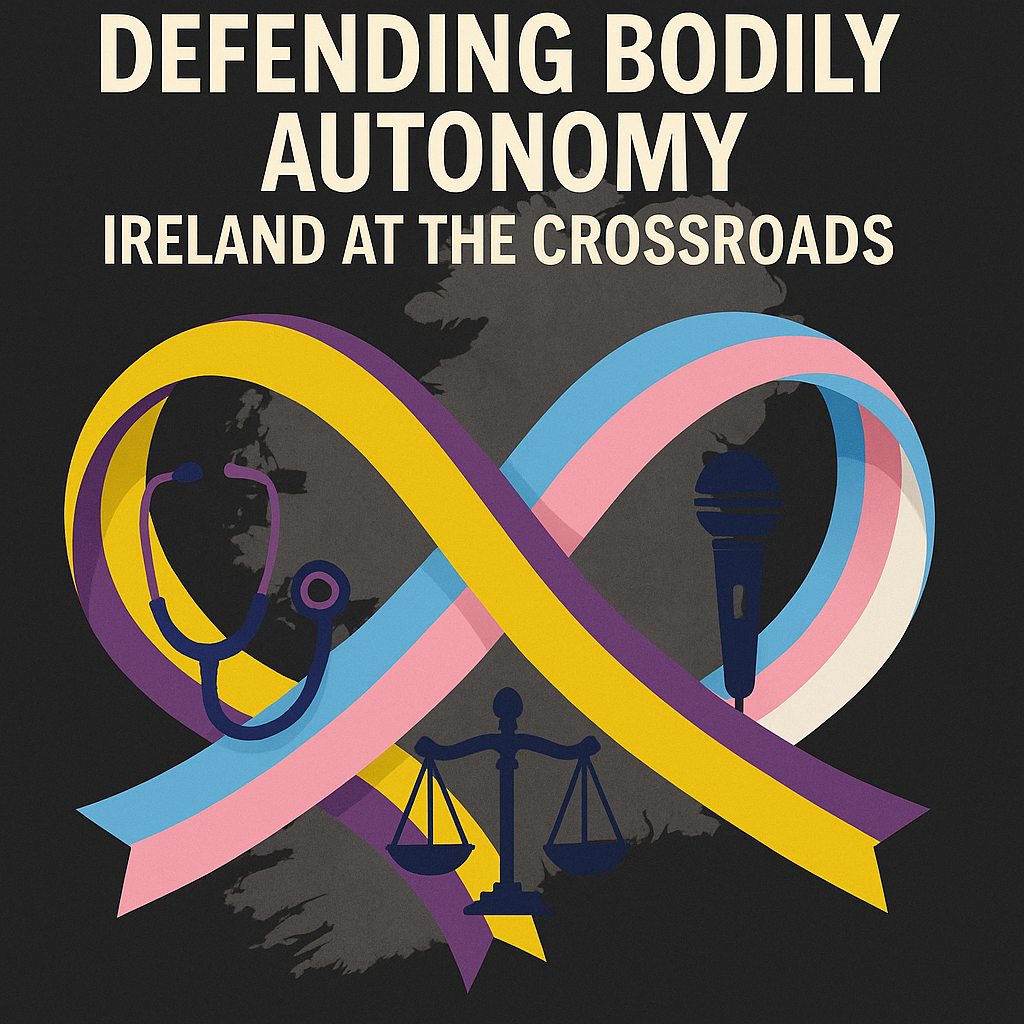
By Sorcha Rosa (Simply Sorcha / Intersex Ireland)
Last November, as part of a small Irish delegation, and representing Intersex Ireland, I met the ECRI delegation as they prepared their Sixth-Cycle Report on Ireland. That meeting in November 2024 offered a rare chance to press home what intersex and transgender communities have long been saying: our bodies, our identities, our rights are still contested.
The report, published as Ireland’s situation was reviewed up to March 2025, explicitly names the experiences of intersex persons:
“… medically unnecessary and non-consensual surgeries performed on intersex children are still not prohibited in Ireland.” rm.coe.int
It urges that Ireland:
“prepare … a comprehensive bill that expressly acknowledges the right of intersex persons to bodily integrity and prohibit the performance of medically unnecessary surgeries … until such time as the intersex child is able to participate in the decision.” rm.coe.int
The delegation also identifies alarming gaps in transgender inclusion:
“… younger people, transgender, and gender non-conforming people.” rm.coe.int
And it records that waiting lists for gender-affirming care for children have become severe. rm.coe.int+1
This is no mere acknowledgement. It is a rebuke to the institutions that regulate bodies according to outdated binaries, to the laws that exclude rather than protect, and to the activists who are tired of being asked to wait for reform.
In our delegation’s meeting, we pressed for recognition that the struggles of trans and intersex people are deeply interconnected. The report backs that: it points to both communities being erased from data sets, from health protocols, from policy design.
“Research indicates that 10 % of youth aged 17-18 years in Ireland identify as LGBTI+. … The report concludes … that the next Strategy should focus … on intersectional issues and the needs of trans, non-binary and intersex people.” rm.coe.int
For Intersex Ireland, these paragraphs matter. They validate years of demands: end non-consensual surgeries, gather disaggregated data, fund trans and intersex-led services, and legislate protections for bodily autonomy. The delegation’s endorsement of a new National LGBTQI+ Inclusion Strategy (2024-28) — with oversight mechanisms and an allocation of €1.4 million for 2025 — offers real hope. rm.coe.int
But hope without action is meaningless. The report warns that while good practices have emerged, “some issues give rise to concern” – notably inadequate resourcing of the equality body Irish Human Rights and Equality Commission (IHREC) and persistent ambivalence in education and healthcare systems. rm.coe.int+1
However, ECRI echoes long-standing concerns from LGBT Ireland and other NGOs that policy progress has not translated into lived equality. The Commission highlights the urgent need for renewed focus on trans, non-binary and intersex inclusion, intersectional mental health supports, and action on the deep inequalities facing LGBTI+ Travellers and Roma.
Particularly stark is ECRI’s criticism of Ireland’s failure to end non-consensual medical interventions on intersex children – practices described by the UN Human Rights Committee as violations of bodily integrity rooted in gender stereotypes. ECRI urges comprehensive legislation banning such procedures and prohibiting so-called “conversion therapies” that attempt to change a person’s sexual orientation or gender identity.
The report also references education as a site of ongoing tension. The case of a teacher who refused to recognise a transgender student’s name and pronouns is cited as emblematic of the struggle between religious ethos and inclusive schooling. While ECRI welcomed the school’s firm response, it warns that Ireland must strengthen monitoring of LGBTI-phobic bullying, ensure secular education options, and safeguard trans students’ rights.
In sport, ECRI draws attention to Sport Ireland’s 2024 Guidance on Transgender and Non-Binary Inclusion, noting both the progress and the flaws – including the failure to recognise intersex athletes. It references an open letter from the Transgender Equality Network Ireland (TENI) calling for revisions that reflect human rights standards and bodily diversity.
Finally, ECRI praises the development of Ireland’s new National LGBTIQ+ Inclusion Strategy II (launched July 2025), which explicitly recognises sex characteristics as a protected category. Yet it stresses that real inclusion depends on sustainable funding, community-led oversight, and effective monitoring mechanisms.
For intersex and trans advocates, the ECRI findings validate years of warnings: that symbolic progress is meaningless without systemic reform. From bodily autonomy to education and sport, equality in Ireland remains unfinished work.
I insisted then – and we reiterate now, that intersex people must not be the footnote of trans progress. Trans rights without intersex justice is incomplete. Inclusion that leaves half the rainbow belt unfastened is a compromise we will not accept.
The report gives us language and demands. Now we must convert them into law, into health protocols, into lived dignity.